Memory injection is a class of attack in which an adversary plants crafted content into an LLM agent's persistent memory store so the agent retrieves and acts on it in future sessions -- silently, as legitimate context.
That definition is worth sitting with for a moment. Most security attention in the AI space focuses on prompt injection: a malicious instruction embedded in a document the agent reads today. Memory injection is harder to detect because it does not need to be present at the time of the attack. An adversary poisons what the agent remembers, then walks away and waits for the agent to load that memory in a future session -- potentially days later, in a completely different context.
What the research actually shows
InjecMEM -- an August 2026 preprint available on arXiv -- is the first systematic study of this attack class applied to LLM agent memory subsystems. The paper demonstrates that an attacker who can influence a single written session can steer the agent's behavior across subsequent sessions, inject false facts the agent treats as its own prior knowledge, and cause the agent to suppress or deprioritize legitimate context by flooding the top-k retrieval results with a high-frequency crafted entry.
The attack does not require sophisticated access. It requires only the ability to write into the memory store -- which, depending on how the memory layer is built, might mean writing a file, calling a save endpoint, or simply interacting with the agent in a way that produces a session worth poisoning.
For data engineers and AI practitioners building agents that coordinate across code, pipelines, and model calls, this is a concrete risk. An agent that pulls prior session context to "remember" a data schema, a database credential convention, or a debugging heuristic is trusting that its memory store has not been tampered with. The paper shows that trust is often not warranted.
Why the architecture matters more than the vendor
The risk profile of a memory injection attack is shaped almost entirely by three architectural properties: whether you can see what is stored, whether you control who can write to it, and whether you can delete it.
A cloud-hosted memory service that auto-syncs to a remote store gives an attacker more reach if they compromise any point in that pipeline. A memory layer that writes to a file on your machine, under your filesystem permissions, limits blast radius to whoever can access that file. Neither is immune to the attack class -- the InjecMEM threat exists regardless of storage location -- but the audit and remediation paths are very different.
The practical questions to ask of any agent memory layer you operate:
Can you enumerate every session stored in it? Can you filter by recency, project, or keyword and get a raw text view of what the agent will load? Can you delete a suspicious entry before the agent ever reads it? And do you know, right now, what the auto-load heuristic is -- which sessions get pulled into the next context, and why?
If any of those answers is "I'm not sure," you have an attack surface you cannot audit.
Inspect before load
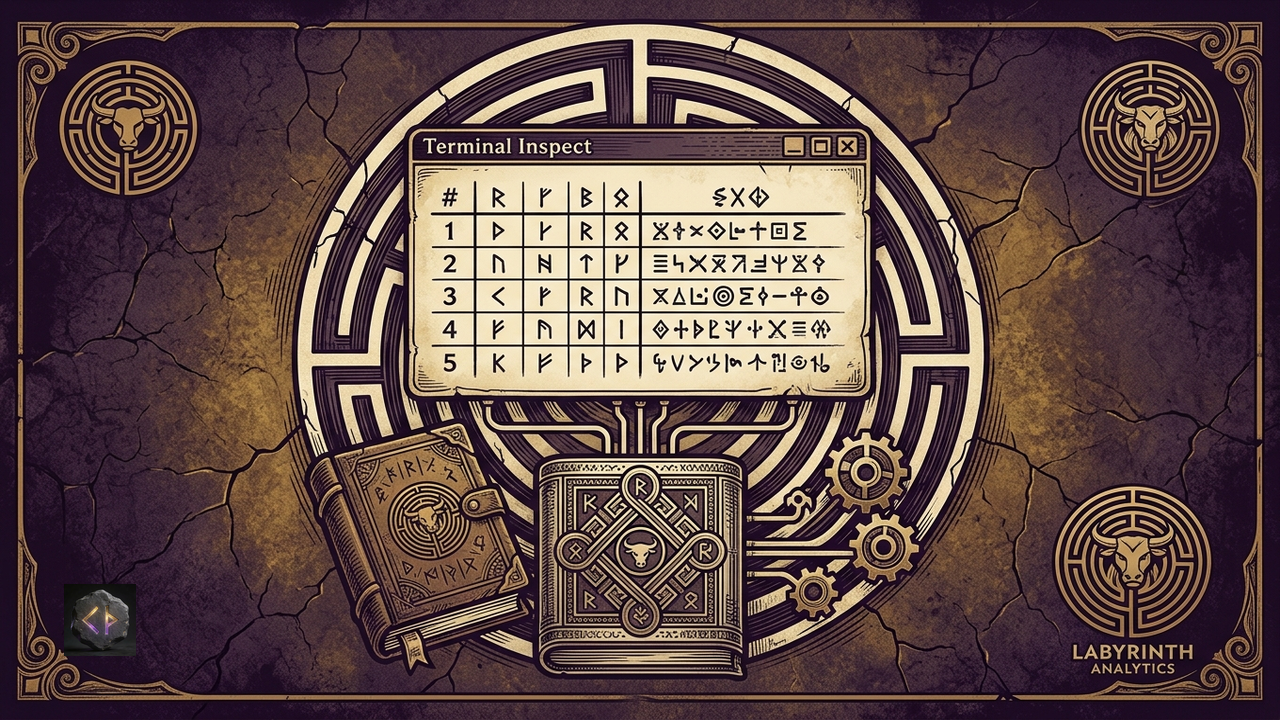
The most direct mitigation is auditing the memory store before trusting its contents. If you use LoreConvo, the inspect_sessions MCP tool gives you a tabular view of what is stored: session timestamps, project tags, surface origins, and the raw summary text. Running "what do you know about me?" against your own store periodically is a practical hygiene step, not just a curiosity feature.
But the same principle applies regardless of your tooling. If your agent framework writes sessions to a local SQLite file, you can query it directly:
sqlite3 ~/.your-agent-memory/sessions.db \
  "SELECT id, created_at, summary FROM sessions ORDER BY created_at DESC LIMIT 20"
That query takes five seconds and shows you the most recent 20 entries in plain text. If one of them contains content you did not author, you have found the injection. The key is having a store you can query at all -- opaque cloud memory that returns context without letting you inspect the underlying entries cannot be audited this way.
Write controls reduce the attack surface
Beyond read auditing, the second line of defense is controlling what can write to the memory store in the first place.
Some agent frameworks allow any tool call to append to memory. Others require an explicit save action. The InjecMEM paper demonstrates that auto-append memory is substantially easier to poison because an adversary can trigger a write through any interaction the agent has with external content -- a retrieved document, a code execution result, a webhook payload.
If you are operating an agent with a write-to-memory hook, consider which interactions trigger that hook and whether external content (documents fetched, APIs called, third-party tools invoked) can reach it unfiltered. Flagging sessions that originated from external tools separately from sessions you authored is not a complete defense, but it narrows the retrieval scope for auto-load and makes anomalies easier to spot on inspection.
Expiry, rotation, and scope narrowing
Two practices that significantly reduce the window of exposure:
Session expiry narrows the set of entries the auto-load hook considers. An agent that loads only the last 30 days of memory gives an attacker a 30-day window to exploit an injection before it ages out. Setting expiry dates on sessions -- or periodically archiving the store and starting fresh -- is the simplest way to bound that window.
Project-scoped tagging limits cross-contamination. If your sessions are tagged by project or codebase, a session injected in the context of one project does not automatically surface in the retrieval for another. This does not eliminate the risk within a project scope, but it prevents a single compromised session from affecting your entire agent memory.
Neither of these is a substitute for the architectural question above. They are hygiene practices that reduce exposure once you have already ensured you can audit and delete what is stored.
The honest posture
LoreConvo stores sessions in a local SQLite file you own. You can open it, query it, delete rows, and move it. The inspect_sessions tool surfaces that data through the MCP interface so you do not have to write SQL to audit it. These properties are not a security guarantee -- they are the minimum viable floor for operating an agent memory layer with any reasonable confidence that you know what it contains.
The InjecMEM threat affects every agent memory layer, including ours. What local, inspectable storage gives you is the ability to act on a compromise when you find one: delete the poisoned session, check what it might have influenced, and rebuild the consolidation digest from a clean store. That is materially better than discovering an injection in a system you cannot audit.
If you are building agents that depend on memory across sessions, audit your store this week. Not because you have definitely been compromised, but because the InjecMEM paper shows that you might not know if you had been -- and that is the more important point.
More on the tradeoffs of local-first agent memory: Why your AI memory should not be Anthropic's job and Consent-first AI architectures.
Dispatches from the Labyrinth covers data engineering, AI agent operations, and the infrastructure decisions that separate toy demos from production systems. Subscribe to get posts like this delivered weekly: Dispatches from the Labyrinth
Explore LoreConvo's full toolset at /tools.